*This post may contain affiliate links and I may earn a small commission when you click on the links at no additional cost to you. As an Amazon Affiliate I earn from qualifying purchases. You can read my full affiliate disclosure here.
Every other Fall, I find myself up to my eyeballs in apples. Roughly every second year there’s a sheer abundance of them, branches bending low. For me, apples are the flavor of autumn, and they carry stories of community, shared meals, and special treats. In 2025, a bumper year again, many apples came from neighbours who reached out through the Fruitful Connections Community Fruit Harvesting Project (now called the Community Fruit Harvesting Program under the Green Bean Collective), and some came from wild trees tucked away along fence lines, and other random places.
Most of the apples were shared, some with homeowners, some with food banks, volunteers, shelters, and community fridges, but even though most we given away there were many left that needed to be eaten or transformed into something new.

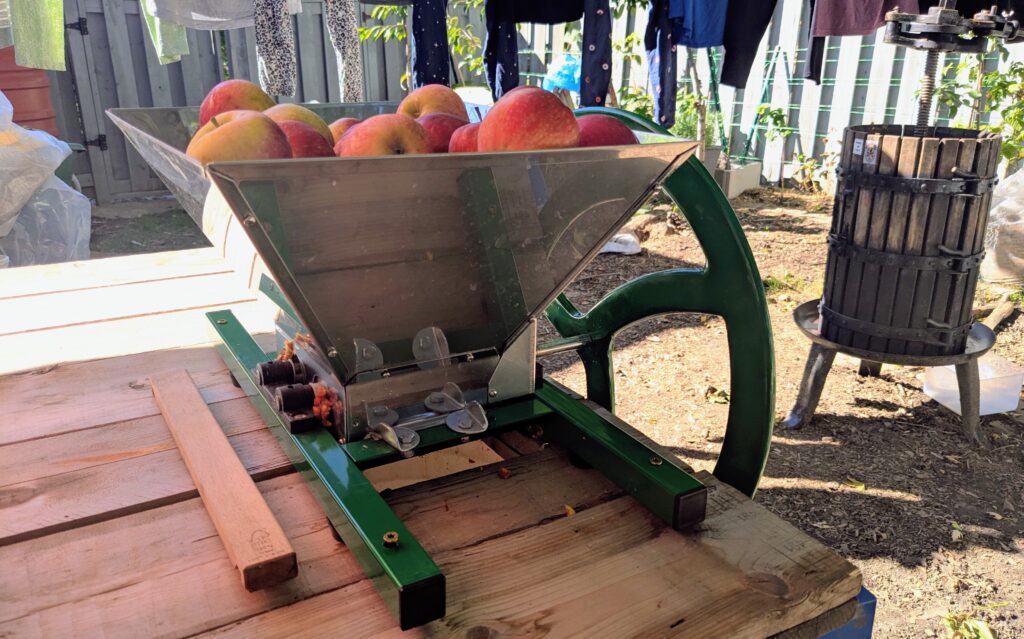
Back in Toronto, years ago, I bought an old wooden wine press from an elderly man in Little Italy. He told me it had seen many harvests in its time, and I planned to give it a chance to see many more.
There’s a rhythm to pressing apples: crush, press, collect, repeat. As the fresh cider runs into containers and buckets, it feels like tapping into a tradition from years gone by. The first taste is sweet, earthy, and alive. I set some aside for drinking fresh, and some goes into jars in my pressure canner for a taste of Autumn later in the Winter.
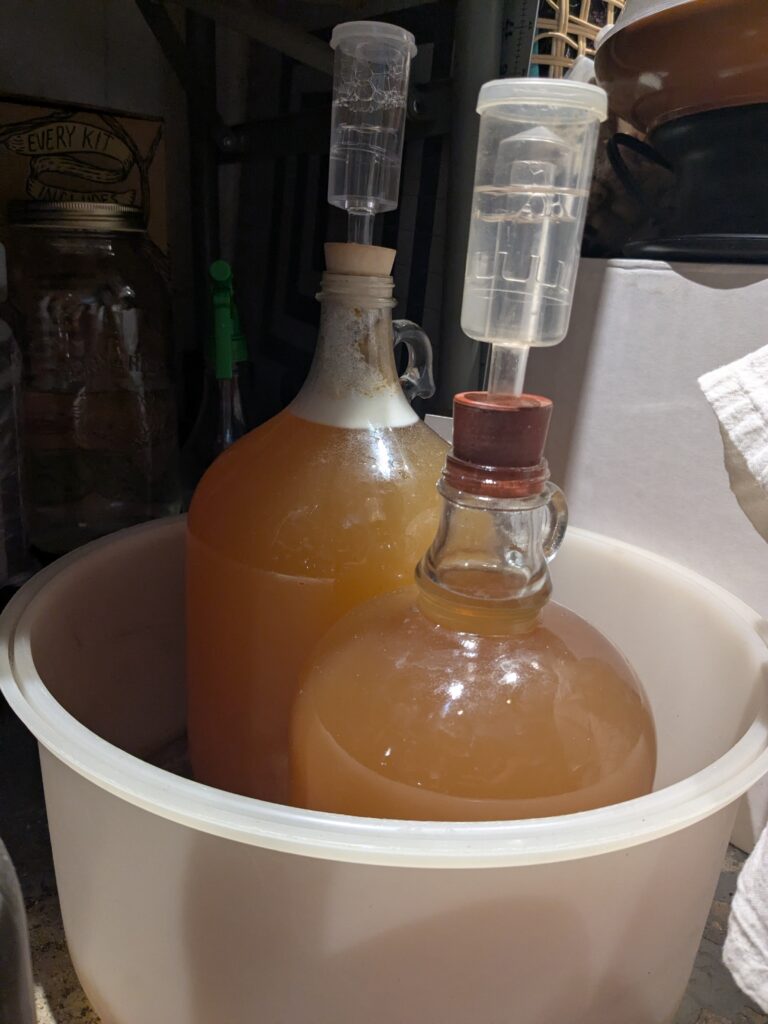
Some I pour straight into a carboy and let sit — trusting the wild yeasts clinging to the apple skins to do their work. This is the slow, unpredictable way. Each batch is different, carrying whispers of the specific apples, the air, the season.
And to the rest I add yeast — the brewing kind — to help things along more predictably. This gives a cleaner, more reliable cider, but I find myself rooting for the wild ferment too, eager to see what surprises it holds.
The cider ferments for weeks, vigorously at first, and then settles down to a slow and steady pace until the yeast consumes all the sugars, leaving a dry, still cider and some sediment on the bottom.
Of course, the process of making cider leaves behind scraps — cores, peels, and pulp. You might think they’d be compost, but not yet.
Into buckets they go, covered with sugar water — one cup of sugar for every gallon of water. I stir, cover them loosely, and set them aside. Six weeks later, I strain the solids, and the liquid continues its transformation, slowly becoming vinegar.
Sometimes I add a vinegar “mother” from an earlier batch, a pellicle that kickstarts the process. Other times, I let it find its own way. Either way, the sharp, tangy vinegar that emerges is a reminder that even what looks like nothing can become something useful.
Fermentation feels like a conversation between myself, the season, and the unseen world of microbes. It’s a reminder of patience, of trust, of letting things take the time they need.
Every sip of cider and every spoonful of vinegar carries the memory of those harvest days, the laughter of volunteers under heavy trees, and the steady creak of the old wine press.
In the end, Fall ferments are less about the product and more about the process — gathering, sharing, pressing, waiting, and finally tasting the season preserved in a jar.